One of the most common reasons men walk into our Decatur and Madison offices is low testosterone, and almost every one of them tells me the same thing: “I just don’t feel like myself anymore.” One patient put it this way. He said he used to be the guy who got up early, hit the gym, crushed it at work, and still had energy left for his kids at night. Now he could barely drag himself out of bed. He’d gained 30 pounds. His wife thought he was angry all the time. He had zero interest in sex. He thought he was just getting old.
He wasn’t. He was 44 with a testosterone level that should have been twice what it was. And his story isn’t unusual. Most men deal with these symptoms for months or years before they say anything. They push through it. They blame stress, or age, or the job. But when the fatigue, the weight gain, the mood changes, and the disappearing sex drive all show up together and nothing you try seems to help, it’s time to look at what’s actually going on.
What Is Low Testosterone, and How Do You Know If You Have It?
Here’s what most men don’t realize: there’s no single number that tells us your testosterone is “low.” Most labs flag anything below 300 ng/dL, but I’ve seen men with levels in the 400s who feel terrible and men in the low 300s who feel fine. A number on a lab report doesn’t tell me how you feel when you wake up, how your clothes fit, or what’s happening in your relationship.
That’s why we look at the full picture: your symptoms, your labs, and how you’re actually functioning day to day. Low T affects everything from energy and muscle mass to mood, mental clarity, sleep, and sex drive. When those systems start breaking down together, it’s usually not a coincidence. It’s about understanding what’s going on with your body specifically.
Signs of Low Testosterone Men in Decatur and Madison, AL Should Watch For
Low T doesn’t usually hit all at once. It creeps in. You might notice one or two things first, then realize over time that the list has gotten a lot longer. Here are the low T symptoms I hear about most from my patients.
Fatigue, Low Energy, and Sleep Problems
Not just being tired after a long day. This is a baseline exhaustion that sleep doesn’t fix. You wake up without feeling rested, hit a wall by early afternoon, and find yourself needing caffeine just to function. And the sleep itself gets worse too: difficulty falling asleep, waking up at 3 a.m., never feeling like you actually recharged. Low T disrupts both energy production and sleep architecture, and poor sleep drives testosterone even lower. It’s a vicious cycle that willpower alone can’t break.
Low Sex Drive and Erectile Difficulty
This is often the symptom that finally gets men to pick up the phone. The desire just isn’t there anymore, or it’s dramatically reduced from what it used to be. Some men also notice changes in erectile quality or frequency. Testosterone is the primary driver of male sexual function, and when it declines, this is usually one of the first areas affected.
Unexplained Weight Gain and Muscle Loss
You’re working out the same amount (or more) and the results have stalled or reversed. You’re gaining fat, especially around the midsection, and losing muscle even though you haven’t changed anything. Low testosterone shifts your body composition in a way that diet and exercise alone can’t fully correct. For some men, combining TRT with a medical weight loss program produces the best results.
Brain Fog, Mood Changes, and Feeling “Flat”
Struggling to concentrate. Forgetting things that should be easy to remember. Feeling mentally sluggish even when you’re well rested. On top of that, your mood shifts: shorter temper, less patience, anxiety that wasn’t there before, or a general flatness where the things that used to make you feel something just don’t anymore. Testosterone receptors exist throughout the brain and directly influence serotonin and dopamine. When levels drop, both your thinking and your emotional baseline take a hit. A lot of men worry it’s early dementia or depression. In many cases, it’s low T.
What Causes Low T?
Testosterone naturally declines with age, typically starting around 30 and dropping about 1% per year. But age is only part of the story. The most common accelerators I see in my patients are excess body weight (fat tissue converts testosterone to estrogen), chronic stress (cortisol and testosterone compete directly), and poor sleep (most testosterone production happens while you sleep). Certain medications, including opioids and some antidepressants, can also suppress levels. Some men in their 30s and 40s walk in with testosterone levels you’d expect to see in a 70-year-old.
Here’s the part most men don’t hear: untreated low testosterone doesn’t just mean feeling bad. Over time, it’s associated with increased cardiovascular risk, loss of bone density, worsening insulin resistance, and accelerated muscle loss. The longer it goes unaddressed, the harder it becomes to reverse the effects. This isn’t something that gets better on its own.
Why We Always Start with Lab Work
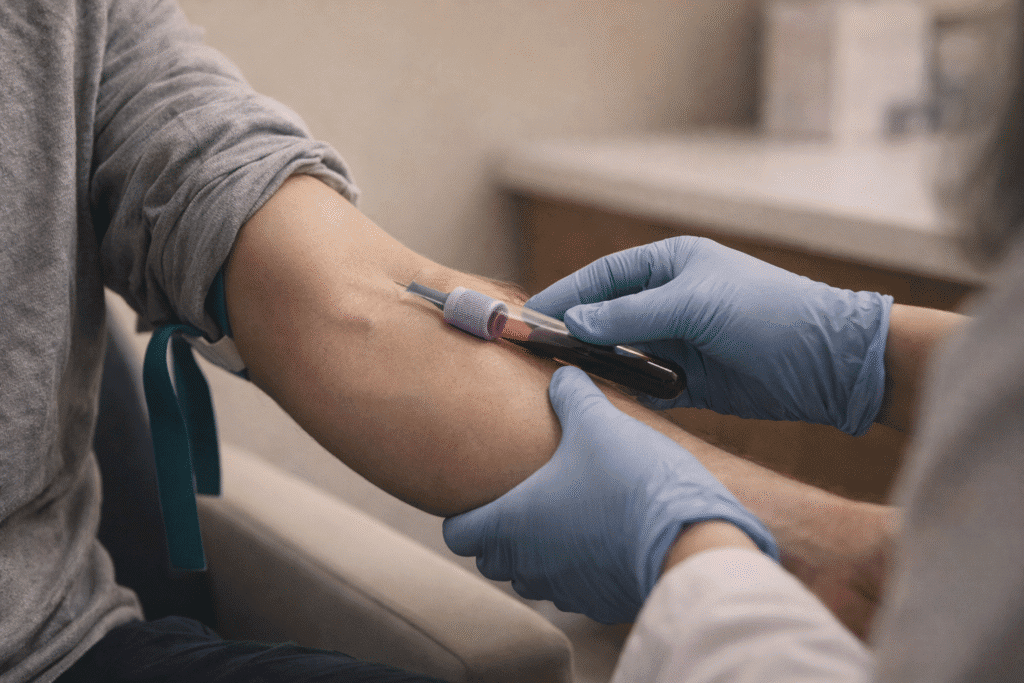
Unlike some of our other services where lab work is case by case, testosterone replacement is one area where I always want to see comprehensive labs before we start treatment. We need a baseline. I’m looking at total testosterone, free testosterone, estradiol, SHBG, a complete blood count, a metabolic panel, and PSA. These numbers tell me not just whether your testosterone is low, but why it might be low and whether there are any factors we need to monitor closely once treatment begins. You can read more about our approach to lab testing on our website.
This is also one of the biggest differences between what we do and what you’ll find at an online clinic or a quick-fix testosterone mill. We don’t just hand you a prescription and hope for the best. We use your data to build a treatment plan that’s actually tailored to you, and then we keep monitoring to make sure it’s working and that you’re safe.
TRT Options: How We Treat Low Testosterone at PrecisionMD
Once we know what we’re working with, we have several options for testosterone replacement therapy. The right one depends on your levels, your lifestyle, and your preferences.
Injections are the most common starting point. They’re effective, well studied, and give us precise control over dosing. Most patients do weekly or biweekly injections, and many prefer to do them at home once they’re comfortable with the process.
Topical creams or gels are another option for men who prefer a daily application over injections. They deliver a steady dose and work well for some patients, though absorption can vary depending on the individual.
For men who want something with less day-to-day maintenance, pellet therapy is an option we offer once we’ve established your optimal levels and know you respond well to treatment. Pellets are inserted under the skin and release a steady dose of testosterone over several months. It’s a great fit for men who don’t want to think about their treatment every day or every week.
Ready to Find Out Where You Stand?
If any of this sounds familiar, the next step is simple: come in and let’s check your levels. You can schedule a consultation at our Decatur or Madison, Alabama office. We’ll sit down, talk through what you’ve been experiencing, run the right labs, and give you a clear picture of what’s going on.
This isn’t something you have to keep pushing through on your own. Low testosterone is a medical condition with real, evidence-based treatment options. And the men who come in wishing they hadn’t waited so long? That’s almost all of them.
We’re transparent about what our programs cost. You can find everything on our pricing page.
Call us at 256-286-1888 or book online to get started.
Frequently Asked Questions About Low Testosterone
At what age does testosterone start to decline?
Testosterone typically begins declining around age 30, at a rate of about 1% per year. However, lifestyle factors, health conditions, and genetics can cause levels to drop faster or earlier. Some men in their 30s have clinically low levels, which is why testing is the only way to know for sure.
How do I know if my testosterone is actually low?
The only way to know is through a blood test. Symptoms like fatigue, low libido, weight gain, and mood changes can point in the direction of low testosterone, but those symptoms can also overlap with other conditions. That’s why we run a comprehensive panel, not just a single testosterone number, so we can see the full picture.
Will I have to be on TRT forever?
It depends on the cause of your low testosterone. For many men, TRT is a long-term treatment because the underlying decline is age-related and ongoing. For others, addressing contributing factors like obesity or sleep issues can improve levels enough to reduce or discontinue treatment. We’ll have that conversation based on your specific situation.
Is TRT safe?
When prescribed and monitored by a physician, TRT has a strong safety profile. The key word is monitored. We check your labs regularly to track hematocrit, PSA, estrogen levels, and other markers that tell us how your body is responding. This is one of the biggest reasons to work with a physician-led practice like PrecisionMD rather than an online-only clinic.
How soon will I feel results?
Most men notice changes in energy and mood within the first few weeks. Improvements in body composition, sexual function, and mental clarity tend to build over the first two to three months. Full optimization usually takes three to six months, depending on the individual and the approach.