I had a patient tell me recently that she felt like her body was working against her. She’d been eating less, moving more, doing everything right, and the scale wouldn’t budge. Worse, she was hungrier than she’d ever been. She said it felt like her brain was obsessed with food. What she was describing, without knowing it, was her hunger hormones fighting her weight loss at every turn.
I told her the truth: her body was working against her. Not because something was broken, but because that’s exactly what hunger hormones are designed to do. When you lose weight, your body interprets it as a threat. It doesn’t know you’re trying to get healthier. It thinks you’re starving. And it has a very sophisticated system of hormones whose entire job is to make you eat more and burn less until the weight comes back.
This is the part of weight loss that nobody talks about honestly. It’s not willpower. It’s biology. And once you understand the hunger hormones driving the process, everything about why diets fail and why medical weight loss works starts to make sense.
Ghrelin: The Hunger Hormone That Spikes When You Diet
Ghrelin is produced in your stomach, and its job is simple: tell your brain it’s time to eat. Before a meal, ghrelin levels rise. After you eat, they drop. It’s a straightforward system when everything is working normally.
Here’s what happens when you diet. When you cut calories and lose weight, your body responds by producing more ghrelin. Not a little more. Significantly more. Research shows that ghrelin levels can stay elevated for over a year after weight loss. That means even after you’ve finished your diet, your body is still screaming at you to eat. That constant, nagging hunger you feel six months into a diet isn’t a lack of discipline. It’s your body turning up the volume on the one hormone specifically designed to make you eat.
Leptin: The Appetite Hormone That Drops When You Lose Weight
Leptin is produced by your fat cells, and it works in the opposite direction from ghrelin. Leptin’s job is to signal your brain that you have enough energy stored and you don’t need to eat. When leptin is doing its job, you feel satisfied after a meal and you’re not thinking about food between meals.
The problem is that when you lose weight, you lose fat cells, and your leptin levels drop. Your brain interprets that drop as a danger signal. It thinks your energy stores are depleted, even if you still have plenty of body fat. So it does exactly what it’s designed to do: it slows your metabolism, increases your appetite, and makes food more rewarding. You’re not imagining that food tastes better when you’re dieting. Your brain is literally making it more appealing so you’ll eat more.
This is the cruel irony of dieting. The more weight you lose, the harder your body works to put it back on. Ghrelin goes up, leptin goes down, and you’re caught in a hormonal storm that no amount of willpower can overcome long term.
Insulin Resistance: The Hidden Reason Weight Loss Stalls
Insulin is a hormone most people associate with diabetes, but it plays a central role in weight management for everyone. When you eat, your body releases insulin to move sugar from your blood into your cells for energy. That’s normal. The problem starts when your cells stop responding to insulin the way they should. This is called insulin resistance.
When you’re insulin resistant, your body has to produce more and more insulin to get the same job done. High insulin levels tell your body to store fat and make it extremely difficult to burn it. It’s like your metabolism has a lock on it, and no matter how little you eat or how much you exercise, the fat stays put. Many of the patients who come to our Decatur and Madison offices have some degree of insulin resistance and don’t even know it. It’s one of the reasons we evaluate each patient individually rather than handing everyone the same plan.
GLP-1: The Natural Hunger Hormone That Weight Loss Medications Mimic
GLP-1, or glucagon-like peptide-1, is a hormone your gut produces naturally after you eat. It does several things at once: it signals your brain that you’re full, it slows down how quickly your stomach empties so food stays with you longer, and it helps regulate insulin and blood sugar. In a normal system, GLP-1 is one of the key reasons you stop eating when you’ve had enough.
The problem is that in many people, especially those who are overweight or insulin resistant, this system isn’t working at full capacity. The signals are muted. The fullness doesn’t hit the way it should. The food noise never turns off.
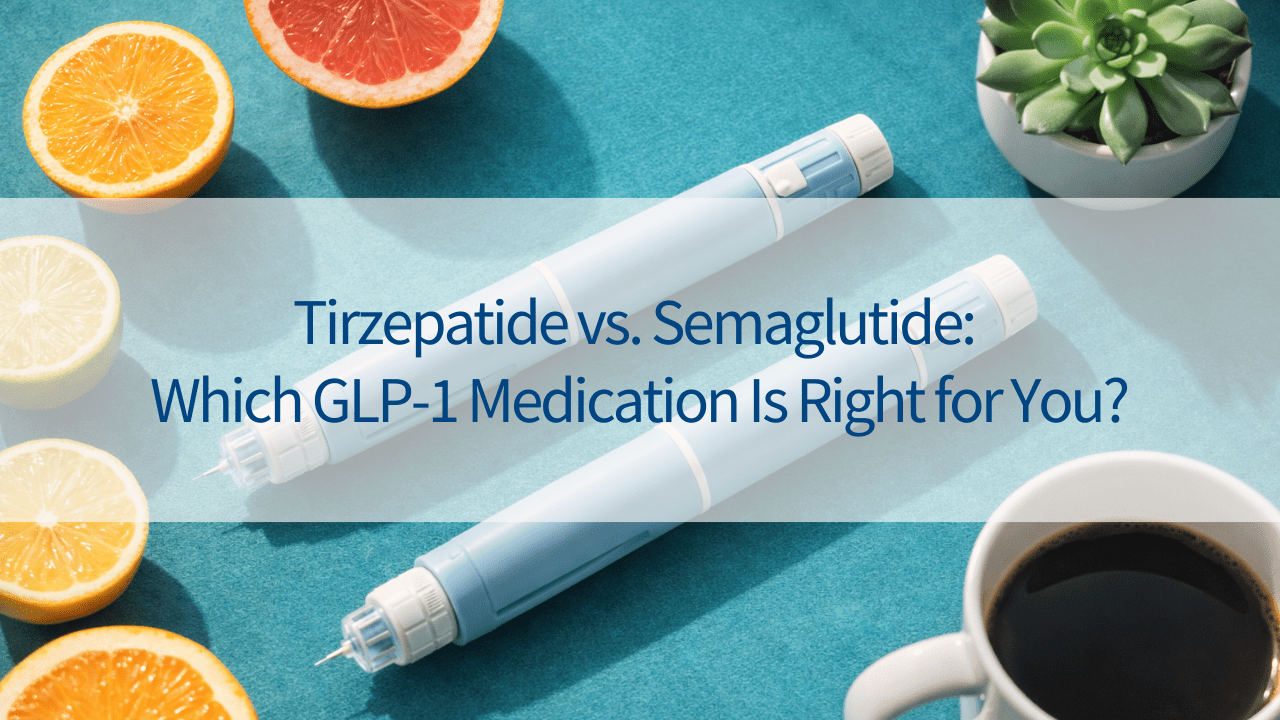
This is where medications like semaglutide and tirzepatide come in. They’re not introducing something foreign into your body. They’re mimicking a hormone you already produce, just at a much stronger and more sustained level. They amplify the signal that your body is already trying to send: you’re full, you don’t need more food, and you can stop thinking about it. That’s why patients describe being on a GLP-1 as feeling like the food noise finally turned off. It’s not suppressing your appetite artificially. It’s restoring a system that wasn’t working properly. You can read more about how these medications work in our semaglutide blog post and our tirzepatide vs. semaglutide comparison.
Why Understanding Your Hunger Hormones Changes Everything
When you understand this biology, it changes the way you think about weight loss entirely. You stop blaming yourself for failing at diets. You stop thinking you just need more willpower. And you start asking the right question: how do I work with my biology instead of against it?
That’s what medical weight loss is. It’s not another meal plan. It’s a clinical approach that takes your hormones, your metabolism, and your individual biology into account and then uses the right tools to address what’s actually happening in your body. Sometimes that’s a GLP-1 medication. Sometimes it’s a combination of medications like phentermine, Qsymia, or Contrave. Sometimes it’s addressing a thyroid issue or a hormone imbalance that’s been making everything harder. Often it’s a combination of several things working together.
How We Approach This at PrecisionMD in North Alabama
At PrecisionMD, with offices in Decatur and Madison, every weight loss patient is evaluated individually. I’m board certified in obesity medicine, and our nurse practitioners hold advanced certificates in obesity medicine as well. We understand the hormonal mechanisms behind weight gain, and we use that understanding to build treatment plans that actually work with your body.
We don’t just hand you a medication and hope for the best. We determine whether lab work makes sense as a first step, we monitor how you’re responding, and we adjust your treatment based on your symptoms and your clinical response. If something isn’t working, we figure out why. That’s the difference between getting a prescription and getting care. You can learn more about our team on our about page.
We’re transparent about what our programs cost. Visit our pricing page for current pricing, and we’ll work with you to find the best medication option for your budget.
Ready to Stop Fighting Your Biology?
If you’ve been blaming yourself for not being able to lose weight or keep it off, it’s time to look at what’s actually going on. Your hunger hormones have been running the show, and there are real, effective ways to change that. Schedule a consultation at our Decatur or Madison office and let’s figure out the right approach for you.
Call us at 256-286-1888 or book online to get started.
Frequently Asked Questions About Hunger Hormones and Weight Loss
Can I fix my hunger hormones without medication?
Lifestyle changes like better sleep, stress management, strength training, and eating more protein can support healthier hormone function. But for many people, especially those who have been dieting for years and whose hormones have adapted significantly, these strategies alone aren’t enough to overcome the biological resistance. That’s where medication becomes a valuable tool.
Is the constant hunger I feel on a diet actually hormonal?
Yes. Research consistently shows that dieting increases ghrelin (your hunger hormone) and decreases leptin (your satiety hormone), often for a year or more after weight loss. The hunger you feel isn’t in your head. It’s a measurable hormonal response.
How do GLP-1 medications like semaglutide affect hunger hormones?
GLP-1 medications mimic a hormone your body already produces. They amplify the signal that tells your brain you’re full, slow gastric emptying so food stays with you longer, and help regulate insulin. The result is a significant reduction in appetite and what patients often describe as the “food noise” finally turning off. You can learn more in our semaglutide blog post.
Do hunger hormones go back to normal after weight loss?
Not always, and not quickly. Studies show that ghrelin can remain elevated and leptin can remain suppressed for over a year after weight loss. This is one of the key reasons why so many people regain weight after dieting, and why ongoing medical management can make a significant difference in maintaining results long term.
How do I know if insulin resistance is affecting my weight?
Insulin resistance often has no obvious symptoms beyond difficulty losing weight, especially around the midsection. Lab work can identify it. At PrecisionMD, we evaluate each patient individually to determine whether insulin resistance or other metabolic factors are contributing to the problem. Book a consultation and we’ll help you get the full picture.