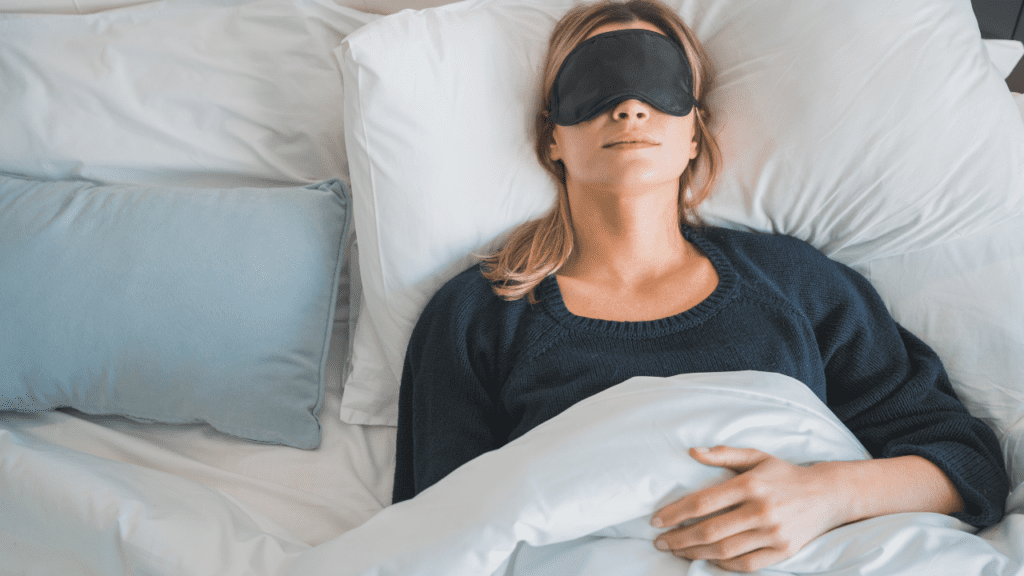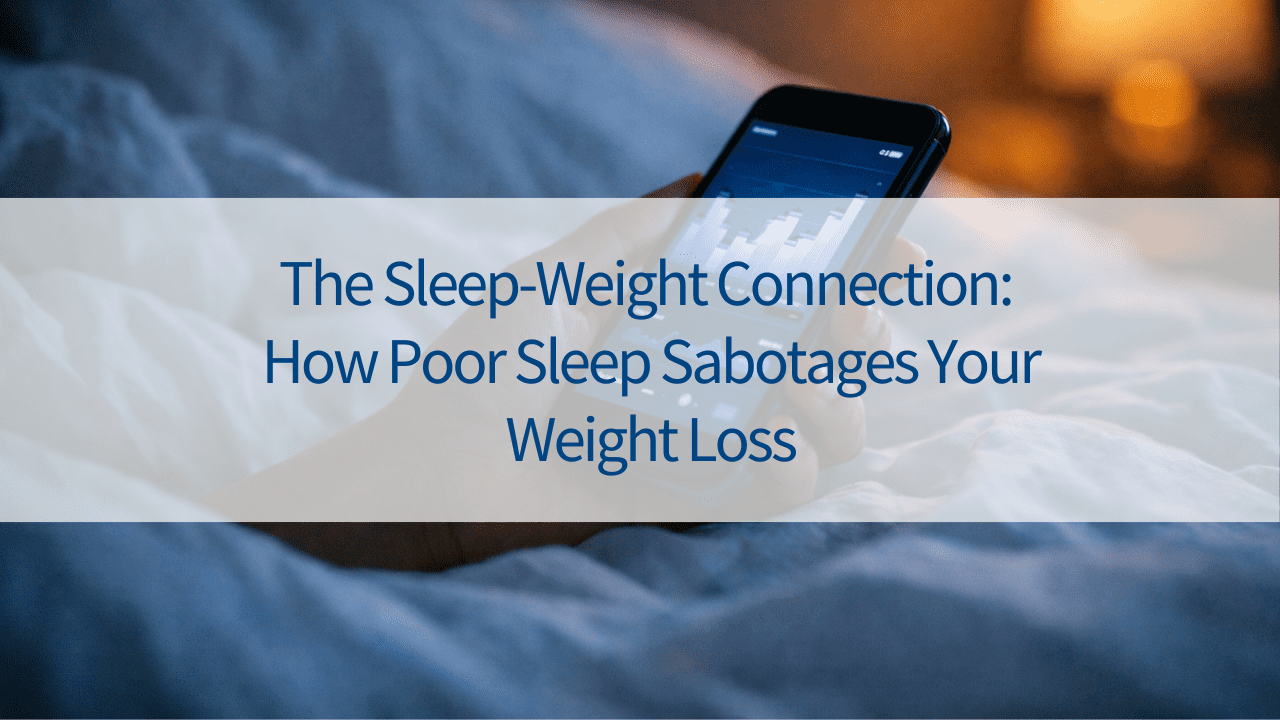
She pulled out her phone before I even finished asking how things were going. She had her food log, her step count, her water intake, everything tracked and color-coded. She’d been on her medication for two months, hadn’t missed a dose, and was eating better than she had in years. But she’d lost three pounds total and she was frustrated. I get it. So I asked her to open one more app: her sleep data. She averaged five hours and 14 minutes a night. Most nights she was waking up at least twice. And right there, on her own phone, was the answer to why everything else wasn’t working.
The sleep and weight loss connection is one of the most overlooked pieces of the puzzle. Sleep is not a lifestyle luxury. It’s a biological requirement for the hormones that control your appetite, your metabolism, and your ability to lose weight. When sleep breaks down, those systems break down with it. And if you’re a woman in your 30s, 40s, or 50s dealing with hormonal changes on top of everything else, poor sleep can quietly undo a lot of the work you’re putting in.
What Happens to Your Hunger Hormones When You Don’t Sleep
Your body runs on a tightly coordinated hormone system, and sleep is where a lot of that coordination happens. Two hormones in particular take a hit when you’re not getting enough rest: ghrelin and leptin.
Ghrelin is your hunger hormone. It tells your brain it’s time to eat. Leptin is the opposite. It signals fullness and tells your brain you’ve had enough. When you sleep well, these two stay in balance. When you don’t, ghrelin spikes and leptin drops. The result is that you wake up hungrier than you should be, you crave higher-calorie foods, and your body’s natural fullness signals get quieter. We covered how these hormones work in detail in our hunger hormones blog post. Sleep deprivation is one of the fastest ways to throw that entire system off.
Research consistently shows that even a few nights of poor sleep can increase ghrelin by 15 to 20 percent and decrease leptin by a similar amount. That’s not a subtle shift. That’s your body actively working against your efforts to eat less and lose weight.
How Poor Sleep Raises Cortisol and Stalls Weight Loss
Cortisol is your stress hormone, and it follows a daily rhythm. It’s supposed to peak in the morning to help you wake up and gradually decline through the day. When you’re not sleeping enough, cortisol stays elevated longer than it should. Chronically high cortisol does several things that directly interfere with weight loss.
It promotes fat storage, particularly around the midsection. It increases insulin resistance, which makes your body less efficient at processing blood sugar. It breaks down muscle tissue, which slows your metabolism over time. And it increases appetite, especially for high-carb, high-fat comfort foods. If you’ve ever noticed that you crave junk food after a bad night of sleep, that’s cortisol and ghrelin working together.
For patients on a GLP-1 medication like semaglutide or tirzepatide, this matters a lot. The medication is helping control your appetite and improve your metabolic signals, but chronically elevated cortisol from poor sleep can blunt those effects. You’re essentially fighting the medication with your own stress hormones.
Why Sleep Problems Hit Women Harder During Hormonal Changes
If you’re a woman in your late 30s or 40s, you may already be dealing with sleep disruption from hormonal shifts. Declining progesterone is one of the earliest changes during perimenopause, and progesterone plays a direct role in sleep quality. It has a calming effect on the brain and helps you stay asleep through the night. When it drops, that 2 a.m. or 3 a.m. wake-up becomes a regular thing.
Estrogen fluctuations add to the problem. Night sweats disrupt your sleep even when you don’t fully wake up, which means you’re getting less restorative deep sleep than you think. And when sleep quality drops, so does your ability to regulate appetite, manage stress, and maintain the metabolic rate you need for weight loss.
This creates a cycle that’s hard to break on your own. Hormonal changes disrupt your sleep. Poor sleep raises cortisol and disrupts hunger hormones. Disrupted hunger hormones make weight loss harder. Weight gain worsens hormonal imbalance. Addressing sleep without addressing the underlying hormonal shifts often isn’t enough. That’s why we look at the full picture, including hormone levels, when patients tell us they can’t sleep and can’t lose weight.
How Sleep Deprivation Slows Your Metabolism
Beyond hormones, sleep deprivation directly affects how your body processes energy. Studies show that even moderate sleep restriction, getting five or six hours instead of seven or eight, reduces your resting metabolic rate. That means you burn fewer calories doing nothing, which narrows the gap between what you eat and what you burn.
Sleep loss also impairs insulin sensitivity. When your cells don’t respond to insulin efficiently, your body stores more glucose as fat instead of using it for energy. This is the same insulin resistance we check for in our comprehensive lab panels. If your labs show markers of insulin resistance and you’re sleeping poorly, there’s a good chance the two are connected.
Sleep Strategies That Support Your Weight Loss in Decatur, AL
I’m not going to tell you to just sleep more. If it were that simple, you’d already be doing it. But there are specific strategies that make a real difference, especially when combined with medical treatment.
Protect your sleep window. Pick a bedtime and a wake time and stick to them, even on weekends. Your circadian rhythm depends on consistency. Shifting your schedule by two or three hours on the weekend is enough to disrupt your hormones for the first half of the following week.
Cool your bedroom down. Your body temperature needs to drop to initiate and maintain deep sleep. A room between 65 and 68 degrees works for most people. This is especially important for women dealing with night sweats during perimenopause.
Cut screens before bed. Blue light from phones and tablets suppresses melatonin production. An hour before bed is ideal, but even 30 minutes makes a difference.
Watch your eating window. Eating a large meal within two to three hours of bedtime can disrupt sleep quality, especially for patients on GLP-1 medications where gastric emptying is already slowed. A lighter evening meal with adequate protein earlier in the evening tends to work better.
Address the hormonal piece. If your sleep problems started or worsened alongside other symptoms like weight gain, mood changes, or cycle irregularity, the root cause may be hormonal. We can check your levels with a comprehensive hormone panel and determine whether treatment like bioidentical hormone therapy could improve your sleep as part of a larger plan.
How We Address the Sleep and Weight Loss Connection at PrecisionMD
At PrecisionMD, we don’t treat weight loss in a vacuum. When a patient is doing everything right and the scale isn’t moving, we dig into the things most providers skip: sleep quality, hormone levels, metabolic markers, and the connections between all of them.
I’m board certified in obesity medicine, and our nurse practitioners hold advanced certificates in obesity medicine. We understand how sleep, hormones, and weight interact, and we build treatment plans that address all of it. Learn more on our about page. Visit our pricing page for current costs.
Ready to Figure Out What’s Stalling Your Progress?
If you’re struggling with both sleep and weight loss, it may not be two separate problems. Schedule a consultation at our Decatur or Madison, Alabama office and let’s look at the full picture.
Call us at 256-286-1888 or book online to get started.
Frequently Asked Questions About Sleep and Weight Loss
How much sleep do I need for weight loss?
Most adults need seven to nine hours per night for optimal metabolic function. Consistently getting less than seven hours is associated with increased appetite, higher cortisol, and slower metabolism, all of which work against weight loss.
Can poor sleep cause weight gain even if I’m eating well?
Yes. Sleep deprivation increases ghrelin (hunger hormone), decreases leptin (fullness hormone), raises cortisol, and reduces insulin sensitivity. These changes promote fat storage and increase appetite regardless of how well you eat during the day.
Will fixing my sleep help me lose weight faster on a GLP-1?
It can. GLP-1 medications work with your body’s hormonal system. When that system is disrupted by poor sleep, the medication has to work harder. Patients who prioritize sleep alongside their treatment tend to see better and more consistent results.
Could my sleep problems be hormonal?
Absolutely. Declining progesterone and fluctuating estrogen are among the most common causes of sleep disruption in women over 35. If your sleep problems started alongside other symptoms like weight gain, mood changes, or irregular cycles, a hormone panel can help us find the cause.
How much does a consultation at PrecisionMD cost?
Our pricing is fully transparent. Visit our pricing page for current costs, or call us and we’ll walk you through everything.